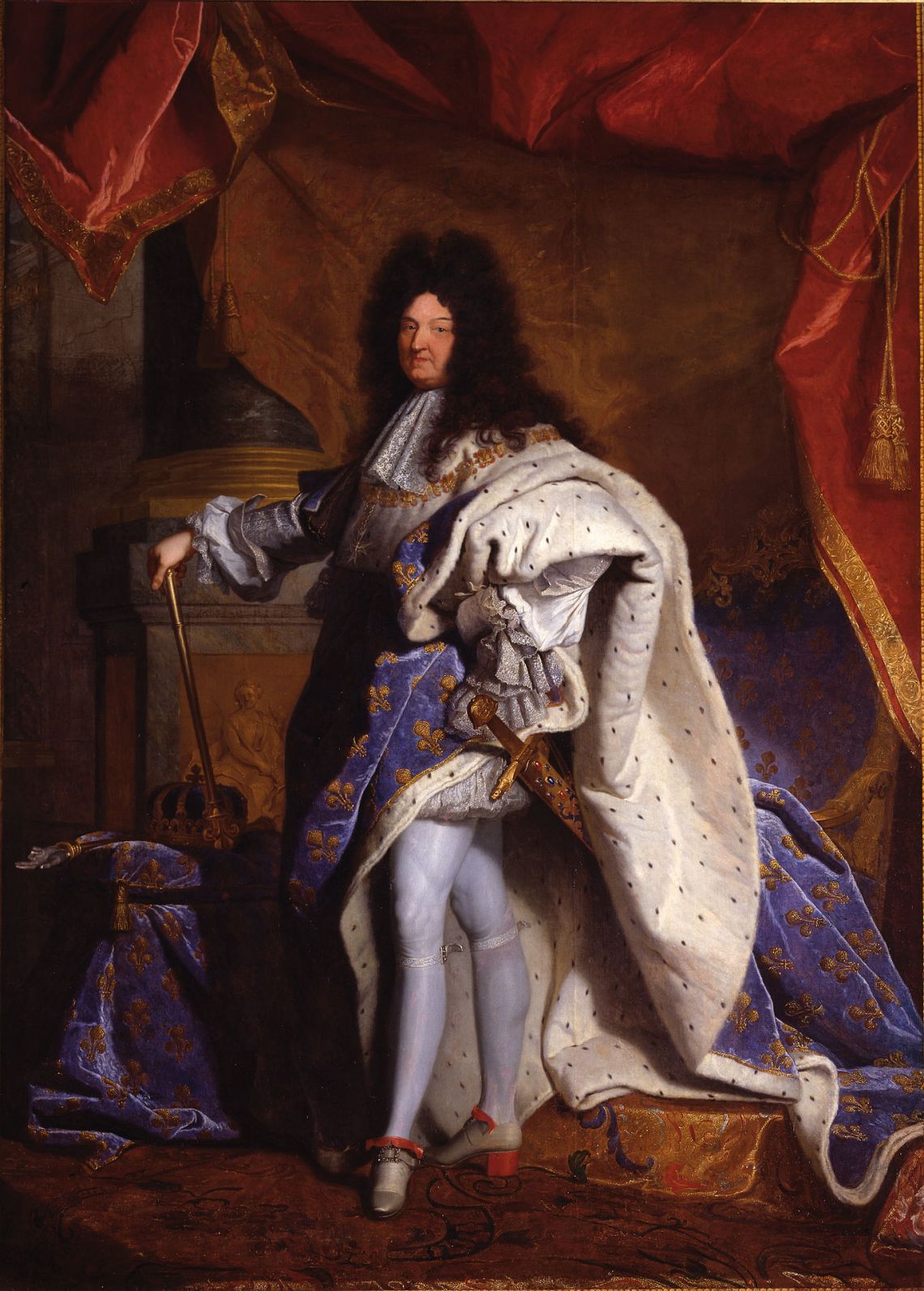
(Louis XlV in his Coronation Robes, painted by Hyacinthe Rigaud in 1701)
Every French schoolchild learning of the history of their nation will have come across the portrait of Louis XlV, the Sun King, in his coronation robes, and those of us who have been in the Louvre Museum in Paris will have seen this huge portrait, or have recognised the copy of it which hangs in the Palace of Versailles. What I had not realised until recently was that this painting was executed by Hyacinthe Rigaud who was born in Perpignan, and who gives his name to the Art Museum in the city, and who was the most famous portraitist in the royal court at the end of the seventeenth and the beginning of the eighteenth centuries.
(Self portrait of Hyacinthe Rigaud with a turban)
Last week I made my first visit to this museum which has recently reopened after massive renovation and extension work. Since 1979 the museum was housed in part of the Hôtel de Lazerme, one of the grand town houses in a city which had many such buildings. This had been the home of the Lazerme family, and home also to Perpignan intellectual life, and a refuge for writers, artists, musicians and poets, as well as a centre of resistance during the Second World War, and it was here that Pablo Picasso often stayed with the family when he visited the city during the 1950s. The massive building works were made possible by connecting this town house with another, the Hôtel de Mailly, thus creating a huge L shaped museum facing two different streets. The result is quite spectacular, and this relatively small city in the far south of France is now home to one of the most beautiful museums in the country. The space for its permanent collection has increased threefold, and it now provides six times more space for its visiting temporary exhibitions. The opening temporary exhibition is called Picasso in Perpignan, which I shall be writing about in a few days time, and which is proving to be a huge success.
Perpignan, and this region, was home to many famous artists, Georges-Daniel de Monfreid, Gustave Fayet and Pierre Daura, and the famous sculptor Aristide Maillol, many of whose works are exhibited here, along with works by Picasso, Henri Matisse, and Joan Miró. The permanent exhibition is divided into four sections displaying works from the Gothic, Baroque, and Modern periods in the life of the city, and work from today’s artists. Below are some of the works which interested me but there is so much more to see here, and if ever you find yourself in this region, the Musée d’Art Hyacinthe Rigaud is certainly well worth a visit.

(A few of the two hundred and eleven small framed works by various artists bequeathed to the museum by a local lawyer. One is by the Catalan artist Joan Miró)

(Cadix – an oil painting by Jean Lurçat painted in 1924)
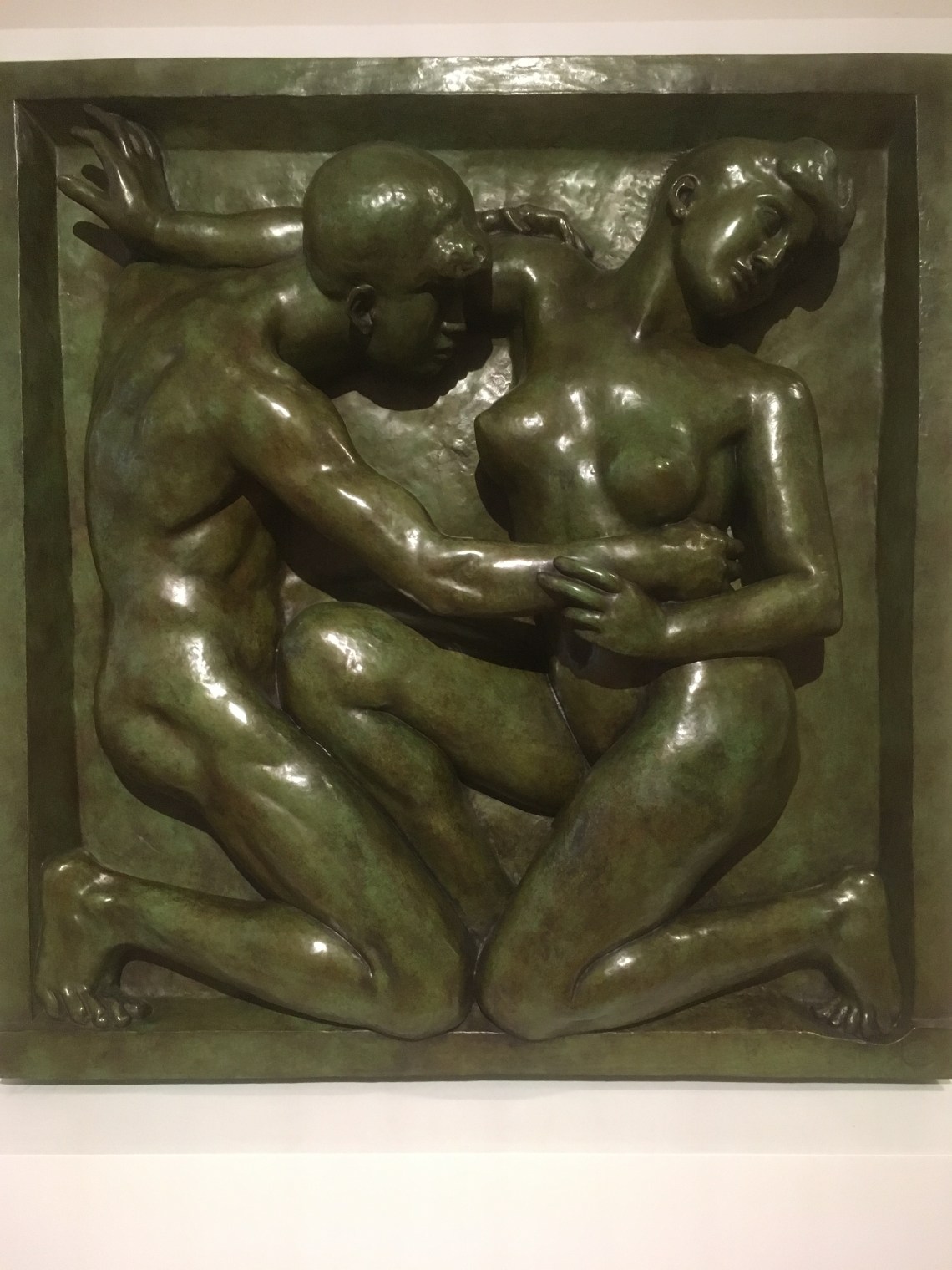
(A work in bronze by local sculptor Aristide Maillol from Banyuls-sur-Mer, created in 1907 entitled Le Désir – Desire)
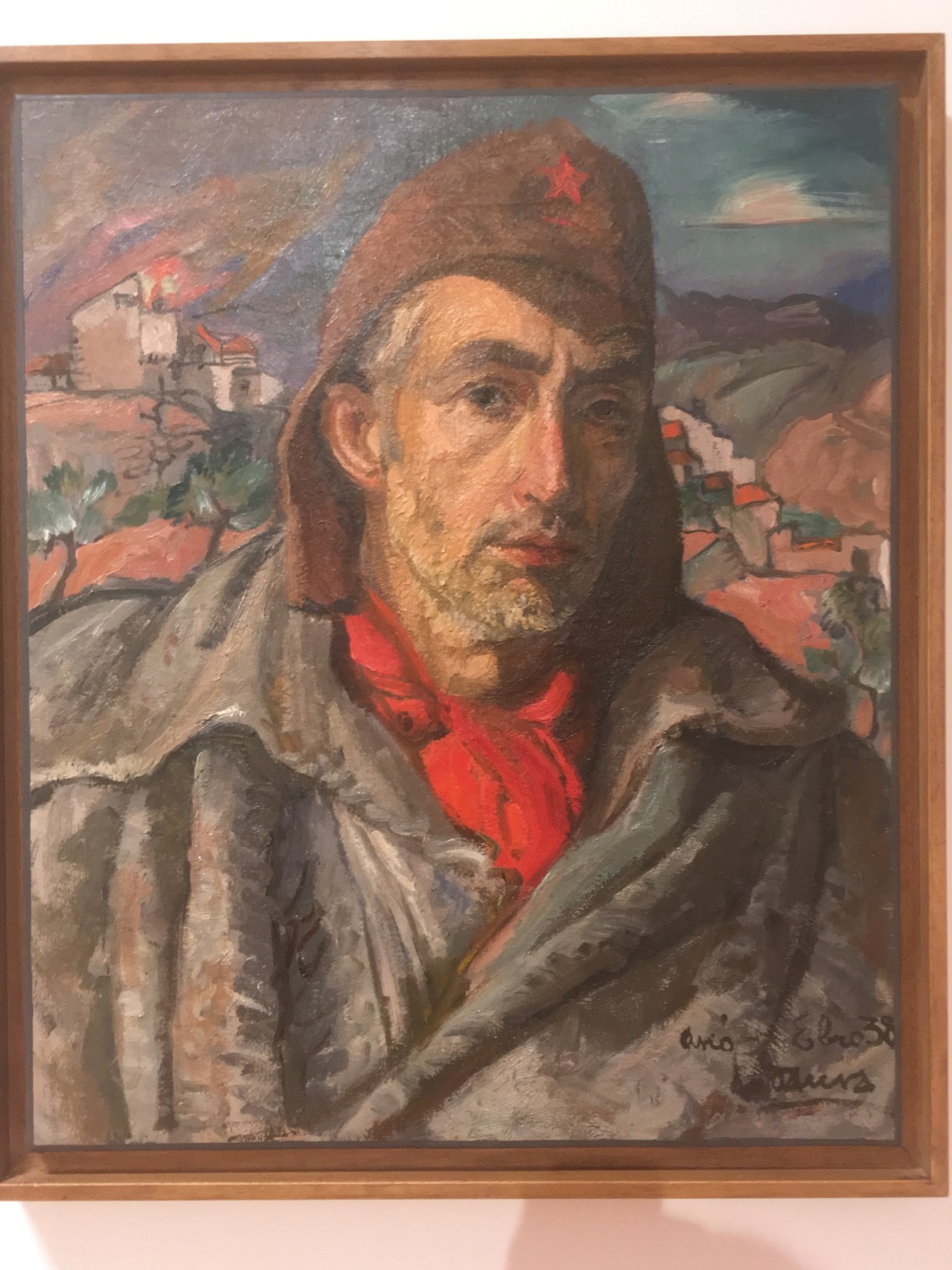
(Self portrait of Pierre Daura as a soldier, painted in 1938. He had joined the Republican militia in 1937 to fight against Franco’s forces in the Spanish Civil War)
And finally my favourite from the whole permanent collection was this altarpiece by an unknown artist, which was commissioned in 1489, by the five consuls who administered the trading port of Perpignan, and which was placed in the chapel of the Loge de Mer, or maritime consulate. Recently restored, the piece is quite stunning, and dominates the room in which it is displayed.

(Retable de la Trinité 1489 by unknown artist)

 rainbowmiscellany